

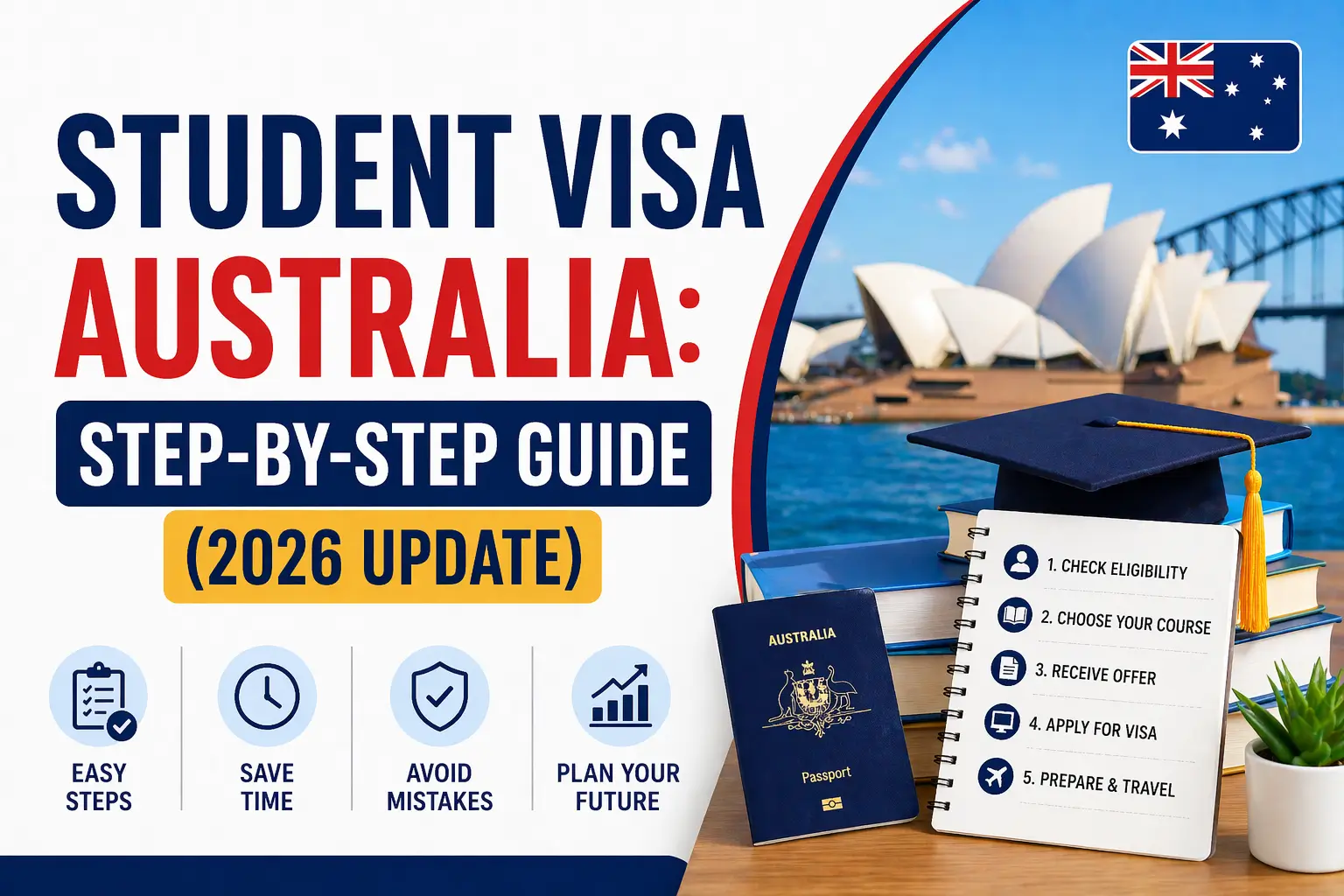
If you are planning to study in Australia, you will need a student visa, formally known as the subclass 500 visa. The application process is more involved than many people expect. Getting it right the first time saves you weeks of delays, potential refusals, and a significant amount of stress.
This guide walks you through the process as it stands in 2026, including the areas where applications most commonly run into problems.
Who Needs a Student Visa?
If you are not an Australian citizen or permanent resident, and you want to study a course that runs for more than three months, you need a student visa. This covers university degrees, TAFE programs, English language courses (if over 12 weeks), and most vocational training.
Children accompanying a student visa holder can also be included on the application.
Step 1: Enrol with a Registered Provider
Before you can apply for a student visa, you need a Confirmation of Enrolment (CoE) from a registered education provider. This is your proof that you have been accepted into a course. Your provider must be registered on the Commonwealth Register of Institutions and Courses for Overseas Students (CRICOS).
Keep your CoE details handy because you will need the CoE number when lodging your visa application.
Step 2: Create an ImmiAccount
All student visa applications are lodged online through the Department of Home Affairs ImmiAccount portal. If you do not have one, create an account at immi.homeaffairs.gov.au. This is where you will complete your application form and upload your documents.
Step 3: Gather Your Documents
This is where most applications slow down. The documents you need include:
- A valid passport (with enough validity to cover your intended stay)
- Your Confirmation of Enrolment
- Proof of financial capacity (bank statements, scholarship letters, or a sponsor’s financial evidence)
- English language test results (IELTS, PTE Academic, TOEFL, or others accepted by your provider)
- Overseas student health cover (OSHC) for the duration of your course
- A Genuine Temporary Entrant (GTE) statement (more on this below)
- Passport-size photograph
- Any prior visa refusal history, if applicable
Depending on your country of origin, you may also need to provide a National Police Clearance certificate.
Step 4: Write Your GTE Statement
The Genuine Temporary Entrant requirement is one of the most misunderstood parts of the student visa process. The Department wants to see evidence that you intend to stay in Australia temporarily for the purpose of study, not as a backdoor pathway to permanent residency.
A strong GTE statement explains your reasons for choosing Australia and your specific course, your economic and social ties to your home country, and your plans after completing your studies. Vague or generic statements are a common reason for student visa refusals. This is an area where a migration agent can add real value.
Step 5: Lodge Your Application
Once your documents are ready and your application form is complete, you pay the visa application charge and submit. As of 2026, the base application charge for a student visa is AUD 1,600, though this changes periodically and additional charges may apply for secondary applicants.
How Long Does Processing Take?
Processing times for student visas vary depending on your country, the course start date, and the volume of applications being processed. The Department publishes processing time estimates on its website. In 2026, most straightforward applications are processed within a few weeks, but complex cases or those requiring additional checks take longer.
Apply well in advance of your course start date.
Common Reasons Student Visas Get Refused
An insufficient GTE statement is the most frequent cause. Others include inadequate financial evidence, failure to disclose previous visa refusals, incomplete documents, and health or character issues.
If your student visa was refused, you may have the right to apply to the Administrative Appeals Tribunal for a review. There are strict time limits on lodging an appeal, so seek advice quickly.
What Can You Do on a Student Visa?
You can work up to 48 hours per fortnight while your course is in session, and unlimited hours during scheduled course breaks. You cannot work before your course starts unless your visa grant specifically permits it. Your family members who travel with you may also have work rights, depending on their visa conditions.
Working with a Migration Agent for Your Student Visa
A registered migration agent can review your GTE statement before you lodge, help you understand what financial evidence is needed, and flag any issues with your application before they become problems. For first-time applicants or those with complicated circumstances, such as prior visa refusals or health conditions, the cost of professional help is often well worth it.
At Migration Doctors, we work with student visa applicants across Australia and internationally. Our Brisbane and Gold Coast offices handle both initial applications and refusal appeals.
Frequently Asked Questions
Can I extend my student visa in Australia?
Yes. If you need to extend your course or change providers, you will need to lodge a new student visa application before your current visa expires. A Bridging Visa will keep you in lawful status while your new application is being processed.
What happens if I fail a semester and my course duration changes?
Your provider will update your CoE. If your new expected completion date extends beyond your current visa, you will need to apply for a new student visa.
Do I need OSHC before I apply?
You need evidence of OSHC to be granted the visa. Most providers can arrange this for you as part of the enrolment process.