

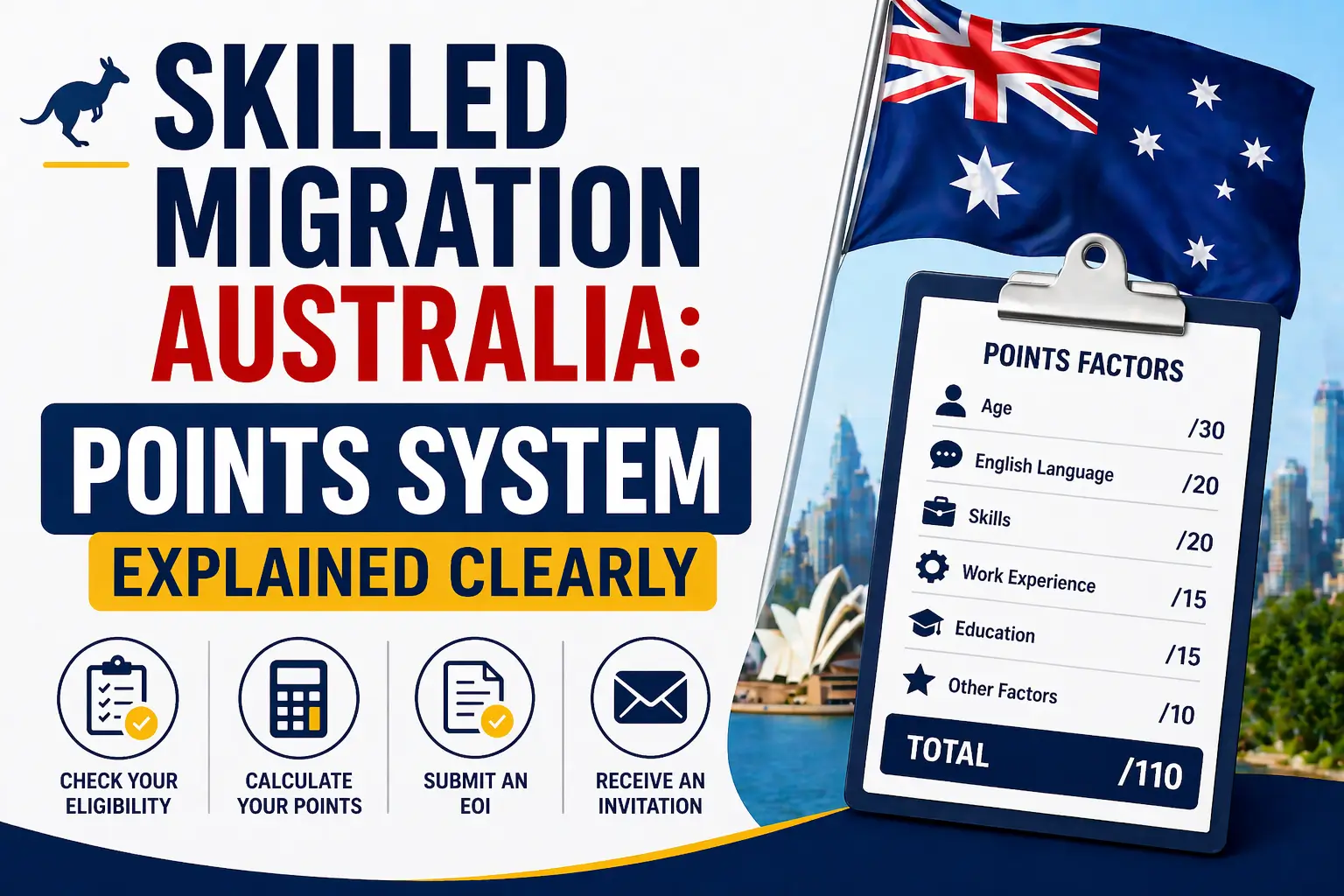
Australia uses a points-based system for many of its skilled migration pathways. If you are applying for a General Skilled Migration visa, understanding how the points test works is not optional. It is the difference between receiving an invitation to apply and waiting indefinitely in a pool.
Here is a clear explanation of how the system works and what actually matters for your application.
What Visas Use the Points System?
The main points-tested visas are the Skilled Independent visa (subclass 189), the Skilled Nominated visa (subclass 190), and the Skilled Work Regional visa (subclass 491). These visas are for workers in occupations on the relevant skilled occupation lists who want to migrate to Australia without employer sponsorship.
How the Points System Works
First, you submit an Expression of Interest (EOI) through SkillSelect. You are not applying for a visa at this stage. You are entering a pool of candidates and being scored against the points test. The Department of Home Affairs then issues invitations to apply based on your points score, your occupation, and the state or territory that may be nominating you.
You need a minimum score of 65 points just to submit an Expression of Interest. But 65 points does not mean you will receive an invitation. In competitive occupations, the actual cut-off score in recent invitation rounds has been significantly higher.
How Points Are Calculated
Points are awarded across several categories. Here is how each one works:
Age is worth up to 30 points. The best age window is 25 to 32, which earns the full 30 points. Points decrease progressively from age 33 onwards and are not available for applicants aged 45 or over.
English language ability is worth up to 20 points. Competent English (IELTS 6 in each band or equivalent) is required for eligibility but earns no extra points. Proficient English earns 10 points and superior English earns 20.
Skilled employment in Australia earns up to 20 points based on years of work in your nominated occupation in Australia. Overseas employment in your nominated occupation earns up to 15 points.
Educational qualifications earn up to 20 points. A PhD from an Australian institution or recognised overseas institution earns 20 points. A bachelor degree earns 15 points.
Australian study requirements, specialist education qualifications, community language skills, and professional year completions each attract additional points in specific circumstances.
State or territory nomination under subclass 190 adds 5 points. Nomination or sponsorship by a state or territory for subclass 491 adds 15 points, which is a significant advantage.
What the Pass Mark Actually Means
The pass mark of 65 points means you can submit an EOI. It does not mean you will be invited. Invitations are issued in rounds, and they go to the highest-scoring candidates first. In 2025 and into 2026, many invitation rounds for popular occupations have cut off well above 65 points.
Your score is also time-sensitive. Points for age and employment change as time passes. An EOI that is competitive today may be less competitive in 12 months if you have not received an invitation.
What You Can Do to Maximise Your Score
The most effective strategies involve improving your English test score, completing additional Australian study or a Professional Year program, building up more Australian work experience, and targeting state nomination. Some states have specific streams for occupations in demand locally, and nomination adds significant points.
Working with a migration agent in Brisbane or a migration agent on the Gold Coast can help you model your points score accurately, identify gaps in your strategy, and time your EOI submission for the best chance of receiving an invitation.
Occupation Lists and Skills Assessments
Before any of this applies, your occupation must be on the relevant skilled occupation list and you must have a positive skills assessment from the relevant assessing authority. Skills assessments can take months and require specific documentation depending on your occupation. This step should be initiated early in your planning.
State Nomination: Why It Matters
State and territory nomination can dramatically improve your points score and may offer more pathways for occupations that are not on the national skilled occupation list. Each state runs its own nomination program with different occupation priorities, income thresholds, and residency requirements.
For applicants targeting Queensland specifically, Queensland’s state nomination program (through Jobs Queensland) periodically opens for various occupation categories. Migration agents based in Brisbane understand which pathways are active and which occupations are being prioritised.
How Long Does the Process Take?
From submitting an EOI to receiving an invitation, timelines vary greatly depending on your occupation and score. Once invited, you have 60 days to lodge a formal visa application. Processing of the visa application itself can take anywhere from several months to over a year depending on the subclass and your circumstances.
Frequently Asked Questions
Can I include points for my partner?
No. Points are assessed on the primary applicant. However, if your partner is a skilled applicant who meets the age, English, and occupation requirements, they may be able to lodge their own EOI or be included in a family unit application in some circumstances.
How often are invitation rounds held?
The Department of Home Affairs typically holds invitation rounds monthly for each occupation and subclass combination. The number of invitations issued per round varies.
What happens to my EOI if I do not receive an invitation?
An EOI stays active in SkillSelect for up to two years. You can update your EOI at any time if your circumstances change, such as after gaining more work experience or improving your English score.